FAQs
Stylus
Stylus and record care
Stylus and record care
To maintain optimal sound reproduction and to minimize wear on your record as well as on your stylus, we recommend the following procedure before and after each playback:
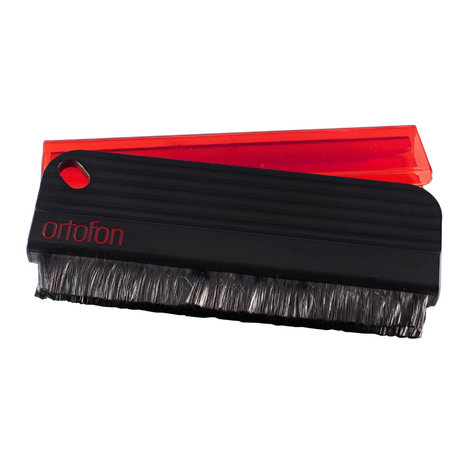
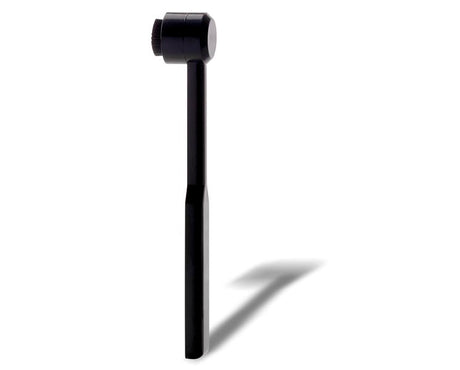
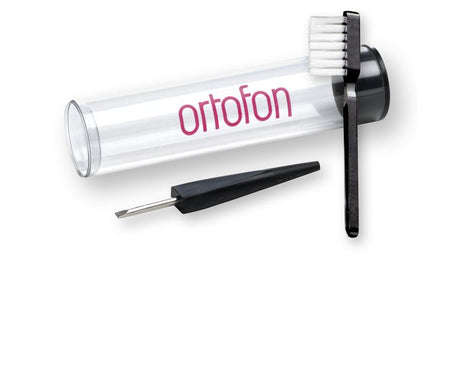
• Remove dust carefully from record surfaces by using Ortofon antistatic Record brush before every use. Use Ortofon Stylus fiber brush a few times along the cantilever in the direction of the stylus tip, whenever you play a new record or change sides. Use the brush in the forward direction from the rear of the cartridge towards the stylus tip and never from stylus tip to the rear of the cartridge and never from side to side. This will take all normal dust and most of the slick release agent from new records. Following this treatment there will normally be no need for further stylus cleaning.
• Ortofon do not recommend the use of solvents of any kind for cleaning of either record surface or stylus. If necessary, records may be washed in lukewarm demineralized water with a dash of sulphonic soap. The detergents should be allergy- & environmental friendly, without perfume or as little as possible: a few drops to a few liters of waters, no lather. Occasional use of record washing machine can be recommended.
• The use of solvents on the stylus and cantilever may damage stylus cement. Also, interior parts of the cartridge can be affected seriously by the intrusion of solvents. The Ortofon warranty service will not be valid in cases where such treatment has caused malfunction of your cartridge.
NB: Ortofon do not recommend the use of the Onzow Zerodust stylus cleaner.
Review quote from Analog Planet, Jul 25, 2012, by Michael Fremer: "...The Onzow Zerodust is recommended only if you can prevent your platter from moving when you lower the stylus into the mound of gel, and only occasionally, unless you exercise extreme caution each and every time..."
• Please mount the stylus guard onto the cartridge whenever the cartridge is not in use in order to avoid accidental damage to the stylus or cantilever. The stylus protection guard provided for the cartridge is designed to be easily replaced and removed. A new stylus protection guard can be purchased on the Ortofon webshop https://www.ortofon.com/hifi/products/styli-guards .
• Please remember to remove dust from the diamond tip before and after playback of each record.
In order to keep electrical contacts clean and to lubricate the knurled nut on the tonearm, Ortofon recommends occasionally a light spray of contact cleaner like DeoxIT ®Gold G-Series into the tonearm socket.
Stylus lifetime
Stylus lifetime
With proper care we find that up to 1000 hours is possible without degradation of performance.
You can learn more about stylus lifetime and how to get the most out of your records here.
Proper care comprises the following:
- Cleaning of record by means of fibre brush before and after every use. Cleaning of record by using record cleaning machine once in a while.
- Cleaning of stylus by means of a fine antistatic brush. Please remember to remove dust from the diamond tip before and after playback of each record. Use the brush in the forward direction from the rear of the cartridge towards the stylus tip and never from stylus tip to the rear of the cartridge and never from side to side.
- Proper adjustment of antiskating, azimuth and tracking force.
Concerning DJ systems used for "scratching" and "back cuing", we have experienced stylus lifetime to be substantially less because of their unique application. As a consequence DJ`s will have to consider about 500 hours at the most.
Styli types
Styli types
There are several different diamond shapes with various properties, and each of them are crucial factors for sound quality.
For more information about Diamonds and Styli types please here.
General cartridge mounting
Cantilever appears off-center when not playing
Cantilever appears off-center when not playing
During playback, the cantilever of a phono cartridge should ideally remain perpendicular to the arc of the record groove. This ensures that the stylus contacts both groove walls symmetrically, minimizing channel imbalance and harmonic distortion. To achieve minimal tracking angle error across the record surface, the cartridge should be aligned according to a recognized tonearm alignment geometry such as Baerwald (Löfgren A), Löfgren B, or Stevenson. Each alignment optimizes the distribution of tracking error and distortion differently across the playing radius of the record.
If perfect alignment cannot be achieved due to tonearm geometry, mounting hole limitations, or headshell constraints, a fine zenith adjustment, meaning a small rotational correction of the cartridge around its vertical axis, may be required. This adjustment helps align the stylus tip’s contact edges precisely with the record groove direction at the null points.
When no tracking force is applied to the stylus, cartridges that use magnetic or semi-magnetic armatures may exhibit a slight lateral deflection of the cantilever. This occurs because the armature naturally settles into a neutral position within the magnetic field generated by the strong permanent magnet. This minor “bend” or offset visible at rest is normal, provided that the cantilever straightens and tracks symmetrically when the recommended tracking force is applied during playback.
Leads connections
Leads connections
All Ortofon cartridges have a color coding of the terminals, indicating red and green for right channel, respectively hot and ground terminal. White and blue for left channel, respectively hot and ground terminal. Green terminal will always be used for grounding the cartridge housings or motor-system whenever connected inside the cartridge.
We recommend to connect lead wires to the cartridge and headshell before mounting the cartridge on the headshell. Please remember correct orientation of the leads. Ortofon SH-4 headshell and Ortofon cartridges' terminal PINs diameter is 1.2 mm, while Ortofon headshells' PINs diameter is normally only 1.0 mm. Using LW 7N with the SH-4 headshell requies the LW 7N shell side clamp to be widened a little bit to fit on the SH-4 PINs. If shifted around, it may cause over-tightening of the assembly. Being aware about this detail, you will avoid the risk of having the cartridge's terminal PINs fall out.
Azimuth, vertical alignment
Azimuth, vertical alignment
Azimuth adjustment or vertical alignment of the cartridge is very important for optimal channel separation.
The checking is easily done by lowering the cartridge onto a thin mirror placed on the record surface and examining whether the reflection lines up square with the cartridge, when viewed from the front.
During this test tonearm must still be parallel to the record surface. If not obtainable because of mirror thickness, remove record and work directly on the mat. If alignment is still incorrect and not adjustable because of fixed headshell, the only solution is to resort to packing on one side of the head-shell.
Watch this video that explains how to check and adjust Azimuth
Tonearm level, Vertical Tracking Angle (VTA)
Tonearm level, Vertical Tracking Angle (VTA)
Cartridges are constructed so that cantilever angle corresponds to the 20 deg. record cutting angle, when the cartridge is loaded with recommended tracking force and the cartridge base is parallel with the tonearm and this again is parallel to the record surface.
0.5 mm clearance between the cartridge base line and record surface is the acceptable minimum.
Compatibility with Rega brand TT/TA
Compatibility with Rega brand TT/TA
The Rega tonearms are installed for the height of Rega cartridges, these cartridges’ height from stylus tip to the top of the cartridge mounting surface is lower than standard. When choosing a Moving Magnet cartridge, our recommendation is the 2MR models that are designed for this specific height requirements.
Since it is vital to ensure that the cartridge base is parallel with the tonearm and the tonearm is parallel with the record surface, you will need spacers to ensure the correct setup for other Ortofon cartridges than 2MR.
Spacers below the Rega tonearm base is needed for this.
Rega offers the following options:
https://www.rega.co.uk/accessories/2mm-three-point-arm-height-adjustment-spacer-stainless
https://www.rega.co.uk/accessories/2mm-arm-height-adjustment-spacer-universal
Both will raise the arm by 2 mm. If using these sets, we recommend raising the tonearm 4 mm for OM cartridges, 6 mm for MC Quintet and 4 mm for MC Cadenza.
Acoustic signature offers the following option:
Rega Spacer Set - Acoustic Signature accessories (acoustic-signature.com)
These spacers raise the tonearm in 0,5 mm increments. If using this set, we recommend raising the tonearm 4 mm for OM cartridges, 5 mm for MC Quintet and 5 mm for MC Cadenza.
Anti-skating, bias compensation adjustment
Anti-skating, bias compensation adjustment
Correct bias or anti-skating adjustment is important in order to achieve optimal tracking ability and thereby minimum record wear and distortion. A number of players have a device which, related to the tracking force, will give an anti-clockwise force needed to the tonearm. Correct bias has to compensate for the inwards directed torque on the tonearm caused by the friction between stylus and groove. But this again is influenced by stylus type and amplitudes in the record.
A simple recommendation for a rather precise bias: if you hear distortion in say right channel when using recommended tracking force, increase the biasscale and vice versa. This is for normal cartridge use. But when working like the DJ´s, where the record is turned forwards and backwards, bias has to be reduced otherwise stylus will easily jump in the groove.
Tonearm / cartridge combination
Tonearm / cartridge combination
When choosing either MC or MM cartridges for your record player, total mass of tonearm including cartridge and headshell has to be taken into account in relation to the mechanical compliance (elasticity) of the cartridge cantilever system.Find more information here.Meaning that high mass of the combination needs low mechanical compliance, otherwise record warps can easily provoke tonearm vibrations at frequencies around 4 to 6 Hz, that will bring degradation of performance. At least 8 Hz is advisable.
To choose the right cartridge for your turntable/tonearm please seeour Replacement cartridges for Turntables/tonearms selector.
Break-in
Break-in
A "break-in" period of up to 20 hours of normal playback has to be allowed in order to get the best performance.
User guides
User guides
MC Cadenza Series
MC Quintet Series
Concorde Music
2M Series
Concorde MKII
VNL Series
OM and Concorde MKI
- HiFi Stylus OM and Concorde MKI user guide
- DJ Stylus OM and Concorde MKI user guide
- DJ OM Premounted cartridge
Stylus 300 and 500 series
Malfunctions
Contact problems
Contact problems
Phono cartridges rely on good electrical contact between the cartridge pins and the tonearm leads. If you’re experiencing sound issues or interruptions, this may be due to a contact problem. Here’s what you can do:
- Check Connections: Make sure the cartridge pins are securely connected to the tonearm leads. Dust, oxidation, or loose connections can cause contact problems.
- Clean Pins and Leads: Carefully clean the cartridge pins and tonearm connectors using a soft, lint-free cloth or a specialized contact cleaner. Avoid abrasive materials, which could damage the pins.
Distortion
Distortion
Distortion typically suggests that the stylus may be worn or damaged. When this occurs, you might notice increased distortion when listening to voices and string instruments, particularly toward the inner grooves of records. High frequencies can also lose clarity and transparency. If you notice these symptoms, the stylus likely needs replacement.
Distortion in sound—such as crackling, hissing, or unwanted noise—can arise from various issues within your phono cartridge system. Below are common causes and ways to troubleshoot them:
- Stylus Condition: A worn or damaged stylus often causes sound distortion. Regularly inspect the stylus for signs of wear, and replace it as needed to preserve audio quality.
- Tracking Force and Alignment: Incorrect tracking force or cartridge misalignment can lead to distortion. Ensure both are set according to the guidelines for your specific cartridge model.
- Dust and Debris: Even minimal dust or debris on the stylus or record can introduce distortion. Use a stylus brush or record brush to gently remove any particles, ensuring both the stylus and records stay clean. We advise against using any liquids on the stylus or records.
- Electrical Interference: Make sure all cables and connectors are secure and positioned away from potential sources of interference, such as power supplies, to minimize noise and maintain clarity.
- Incorrect Input or Settings: Confirm that the record player is connected to the appropriate input on your amplifier and that the MM (Moving Magnet) / MC (Moving Coil) switch on your pre-amp is correctly set.
- Playback Speed: Ensure the turntable speed matches the record’s intended playback speed, as incorrect settings can result in pitch distortion.
- Belt and Platter Bearing Condition: A dirty or stretched belt, or a dry or dirty platter bearing, can affect turntable performance and sound quality. Inspect the belt and replace it if it shows signs of wear. For the platter bearing, refer to the manufacturer’s guidelines or consult a professional for maintenance.
Replacement stylus
How to replace stylus in the Moving Magnet cartridge?
How to replace stylus in the Moving Magnet cartridge?
Firstly lock the turntable tone arm, unscrew the cartridge, gently remove the stylus from the cartridge body and insert a new stylus. A stylus is changed usually by pulling straight out and in the opposite direction of the turntable's arm. If the stylus doesn't come with direction, try these: with one hand, hold the cartridge to steady it. With the other hand grasp the stylus from both sides and pull. Install the new stylus. Holding the stylus from the top, press it gently into the space at the tip of the cartridge where the old stylus had been. Don't force it.
Select the right cartridge
How to select the right cartridge for your particular record player?
How to select the right cartridge for your particular record player?
When selecting either MC or MM cartridges for your record player, the total effective mass of tonearm (including tonearm effective mass, cartridge and headshell) has to be taken into account in relation to the mechanical compliance (elasticity) of the cartridge cantilever system.
The rule of the thumb regarding the match between toneram mass and cartridge compliance goes like this: High mass requires low compliance, low mass makes it possible to benefit from high compliance.
Read more about cartridge and tonearm systems resonance frequency and learn how to calculate compatibility of the system here.
Mono cartridge
Why should you use a dedicated mono cartridge for playing vinyl mono records?
Why should you use a dedicated mono cartridge for playing vinyl mono records?
On a mono record the signal is cut only in the lateral dimension whereas a stereo record is cut at +/- 45 degrees into the opposing groove-walls, see the below figure:
A stereo cartridge will be able to replay stereo and mono records, because mono is a special version of stereo where the right and left channels are identical. While a stereo cartridge can play mono records it can’t achieve the same signal precision between the two channels. A mono cartridge produces one signal that is directed to both channels in the system. A mono cartridge playing a mono record produces a more forceful and stable image with a fuller, more impactful sound.
Another big advantage in using a mono cartridge to play mono records is the absence of response to vertical movement. This means that a mono cartridge is basically immune to the pinching effect which comes into action when the stylus is pushed vertically upward in very narrow grooves. Also the response to dust, dirt and wear is reduced substantially. The final result will be a clean and noiseless reproduction of the mono record.
The listening experience will be significantly improved when using a high quality True Mono cartridge for the replay of your mono records.
How to counteract ground loop when using dual-mono type phono stages:
1. Use only one side of the phono stage input, and put a Y-cable on a single one of the phono stage’s outputs, so that the mono signal can be split into 2 channels. That way, there’s only 1 path to ground.
2. If the phono stage has a ground lift setting, then use it.
3. Use a phono stage which is not dual mono topology.
Transformer
Why use a transformer?
Why use a transformer?
Step-Up Transformers (SUT) are a serious option for anyone who owns a Moving Coil (MC) cartridge, one that can significantly improve both the sound quality and sonic character. Quite simply, a good transformer is the best way to audition an MC cartridge with the highest performance possible.
Since the output of MC cartridges is lower than that of a Moving Magnet (MM), higher gain is required to utilize them, such as that provided by SUTs or MC phono preamplifiers. Although both devices provide this requirement, both are fundamentally different in function and in sonic character. This is where SUTs are frequently seen as superior; they are completely passive and offer exceptional noise performance and sound quality.
This is due to the fact that the structure of harmonic and intermodulation distortion is fundamentally different between MC-preamps and SUTs. While an MC pre-amplifier has a constant resistive input impedance, an SUT has an input impedance that is frequency dependent. The harmonic distortion produced by SUTs is highest at the lowest frequencies and drops as the frequency rises, whereas in most MC preamps the distortion increases as the frequency rises. Combined with significantly lower Intermodulation Distortion (IMD), the sound produced with an SUT will be much more open, dynamic, spacious, and natural.
Offering compatibility with most Moving Coil cartridges,Ortofon transformers will enhance the performance of any low output, low impedance MC cartridge.
Principles of operation
Moving Magnet vs Moving Coil
Moving Magnet vs Moving Coil
The Moving Magnet fundamental principle of operation comprises the effect caused by the movements of the stylus in a magnetic field, generating a current in the nearby coils. Here, the magnetic field emanates from a tiny, fixed magnet that is fastened to the remote end of the cantilever.
When the magnet is set into motion, which occurs when the stylus follows the modulations of the record groove, the magnetic field through the coils changes, and electrical voltages are generated in these coils.
Although a moving magnet cartridge uses tiny, powerful magnet on the cantilever, the weight of the magnet will still be a strain on the cantilever, increasing its mass and reducing its ability to react precisely to transients in the music.
The reverse principle is applied to the Moving Coil cartridges. Here, a powerful fixed magnet is used and the coils are mounted on the cantilever itself. When the coils move in the field of the magnet, they cut the flux lines of the magnet and voltages are generated in the coils.
Moving Coil cartridges provide greater linearity and lower distortion.
Tonearms
Do tonearms make a difference?
Do tonearms make a difference?
Yes, tonearms play a crucial role in turntable performance, affecting cartridge tracking ability, resonance and vibration behavior, and overall sound quality.
How does a tonearm work?
How does a tonearm work?
A tonearm holds the cartridge and stylus, allowing them to move across the record surface while maintaining proper tracking force and alignment. The cartridge converts mechanical energy from the grooves into electrical signals. The tonearm must uphold a stable position above the record, ensuring effective tracing of the grooves by the cartridge. This involves maintaining consistent height and angle and applying the appropriate stylus weight. Most tonearms also allow adjustment of anti-skating force to counteract inward stylus pull.
What are the different tonearms?
What are the different tonearms?
Tonearms come in various types, including pivoted tonearms such as uni pivot and gimbal tonearms, and linear/tangential tracking tonearms. Pivoted tonearms can be both S-shaped and J-shaped. Each offers different advantages and may be suitable for specific turntable setups.
What isthe difference between curved and straight tonearms?
What isthe difference between curved and straight tonearms?
The choice depends on personal preference and system setup. Straight tonearms may offer better tracking performance, while curved tonearms can reduce tracking error.
Straight tonearms with pivots are primarily used by DJs for better tracking performance.
Still looking for answers?
Setup essentials
View all-
 €59,00Unit price /Unavailable
 -
 €59,00Unit price /Unavailable
 -
€69,00Unit price /Unavailable
-
€59,00Unit price /Unavailable
-
€69,00Unit price /Unavailable
-
 €5,90Unit price /Unavailable
 -
€9,90Unit price /Unavailable
-
 €29,99Unit price /Unavailable
 -
 €15,99Unit price /Unavailable
 -
€9,90Unit price /Unavailable
-
€20,00Unit price /Unavailable
-
€25,00Unit price /Unavailable
-
€4,90Unit price /Unavailable
-
€9,90Unit price /Unavailable
-
€159,00Unit price /Unavailable
-
€9,99Unit price /Unavailable
-
€9,90Unit price /Unavailable
-
Rubber Rings for Concorde Mk I/Mk II
€4,90Unit price /Unavailable -
€4,90Unit price /Unavailable
-
€49,00Unit price /Unavailable
-
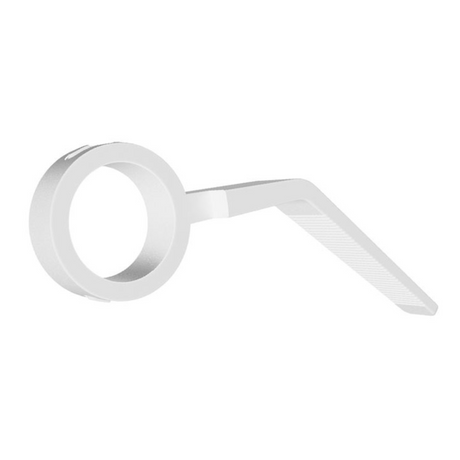
Fingerlift for Concorde Mk II - White
€9,90Unit price /Unavailable -
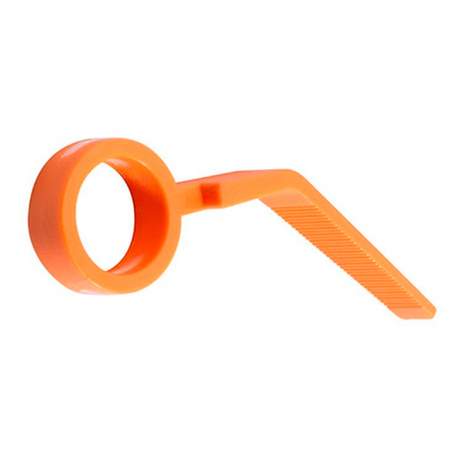
Fingerlift for Concorde Mk II - Orange
€9,90Unit price /Unavailable -
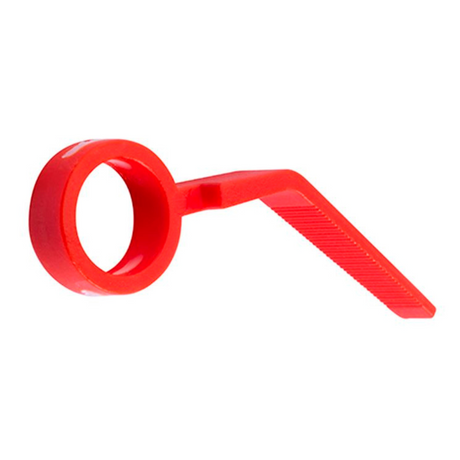
Fingerlift for Concorde Mk II - Red
€9,90Unit price /Unavailable -
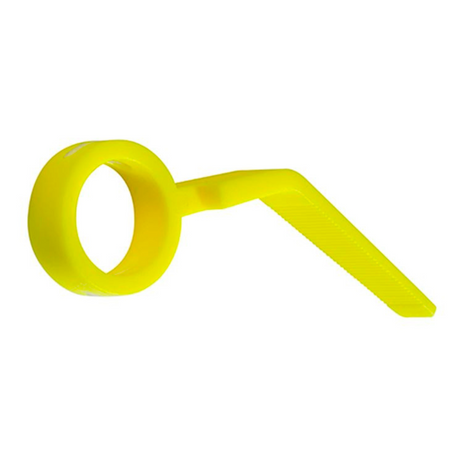
Fingerlift for Concorde Mk II - Yellow
€9,90Unit price /Unavailable